Accommodation Outfitting Process in Newbuild Vessel Projects


Ferry interior refurbishment is not only about renewing old surfaces. In RoPax and ferry refit projects, interiors need to support passenger comfort, crew efficiency, safety, durability and fast daily operations. A successful refurbishment should improve how the vessel works, not only how it looks.
RoPax ferries carry both passengers and vehicles, often on routes where reliability and turnaround time matter. Their interiors face heavy use, frequent cleaning, luggage movement, passenger traffic and operational pressure. Over time, cabins, lounges, restaurants, corridors, crew areas, wet units and service spaces may need refurbishment to extend the vessel’s service life and improve onboard experience.
For marine interior teams, a refit project is different from a newbuild. The existing vessel structure, old materials, limited access and strict schedule all shape the work. Every decision must consider what can be preserved, what should be replaced and how the new interior will connect with the vessel’s technical systems.
Why RoPax and Ferry Interiors Need Refurbishment
RoPax and passenger ferry interiors are used intensively. Seating areas, cabins, stairways, corridors, toilets, crew spaces and food service zones are exposed to constant movement and repeated cleaning. Even durable marine materials can lose performance after years of use.
A refurbishment project may be needed for several reasons:
- Worn flooring, wall panels or ceiling systems
- Outdated public areas
- Damaged or inefficient crew accommodation
- Poor acoustic or thermal comfort
- Aging wet units and service spaces
- Updated safety or operational requirements
- A need to improve passenger experience
- Service life extension for the vessel
RoPax ferry refit projects often aim to keep the vessel commercially useful for longer. Instead of treating the interior as a cosmetic layer, project teams should evaluate how each space performs during daily operation.
Accomar’s cost-effective marine interior refurbishment content gives a useful perspective on how marine interiors can be upgraded while keeping function, durability and project efficiency in focus.
Starting with an Interior Condition Assessment
A good ferry refit begins with a detailed condition assessment. Before selecting new finishes, the team should understand the current state of the accommodation and public areas. Some spaces may only need surface renewal. Others may require deeper replacement, structural preparation or technical coordination.
The assessment should review:
- Flooring condition
- Wall and ceiling systems
- Furniture and fixed units
- Wet areas and sanitary spaces
- Crew accommodation
- Passenger lounges
- Service and galley-adjacent areas
- Access to technical systems
- Damage, moisture or corrosion risks
- Areas that create maintenance problems
This step helps define the real scope of the project. Without a clear assessment, a refit can become a collection of separate repair works instead of a controlled marine interior refurbishment process.
Passenger Areas and Onboard Experience
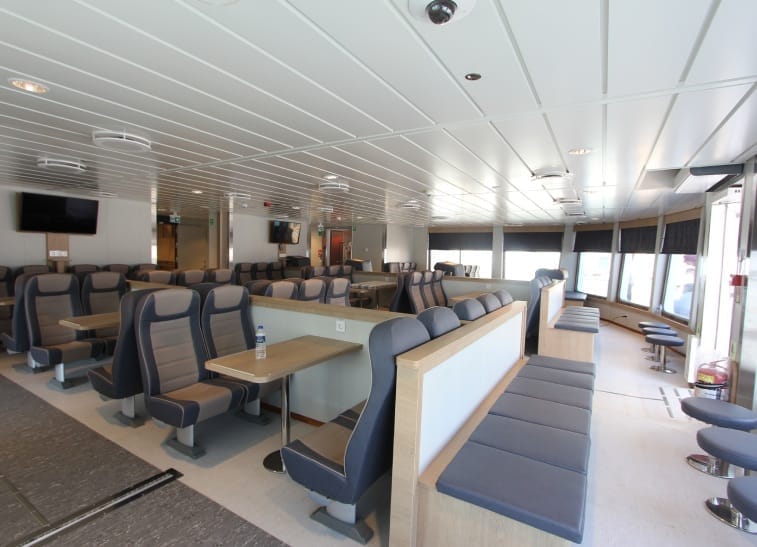
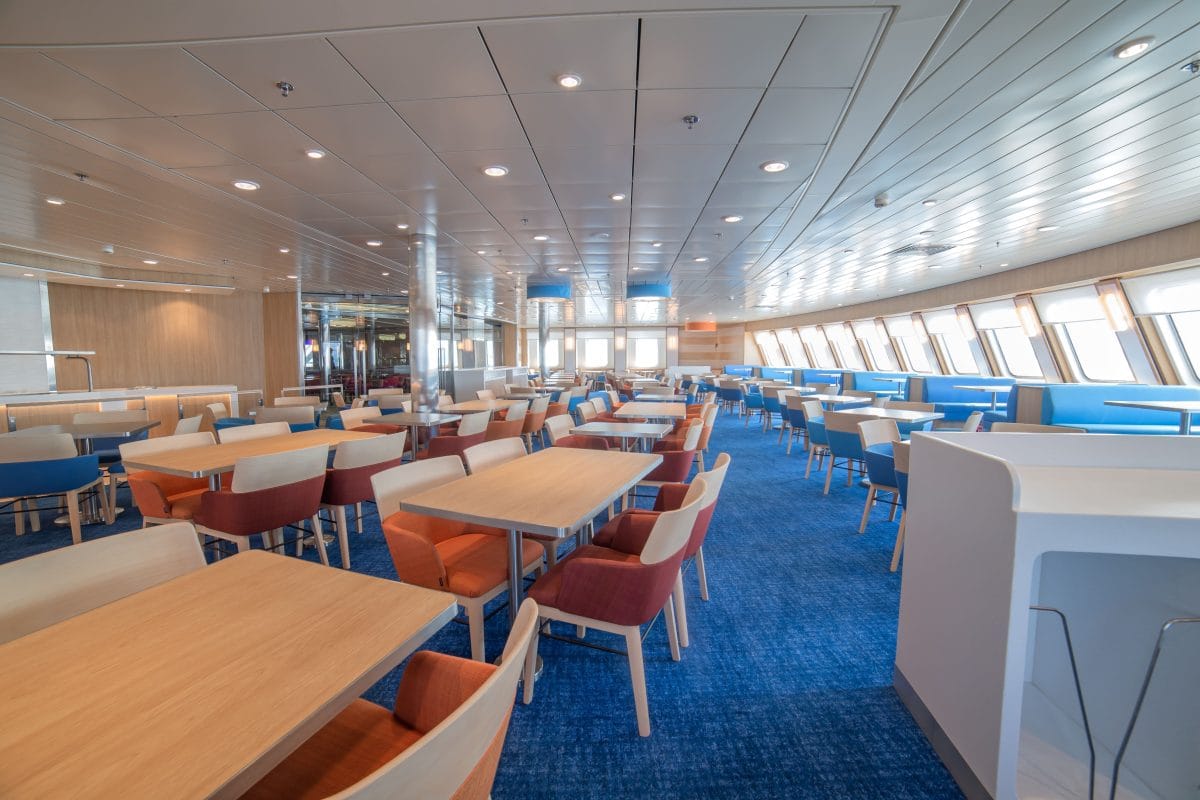
Passenger areas are often the most visible part of a ferry refurbishment. Lounges, restaurants, seating zones, corridors, reception points and sanitary areas shape the onboard experience. These spaces should feel clean, safe and easy to use.
Passenger comfort depends on more than furniture. Flooring, lighting, acoustics, circulation and material quality all affect how the interior feels. A seating area may look renewed, but if movement is difficult or surfaces are hard to maintain, the result may not support daily operations.
In ferry refit interiors, passenger areas should be planned around:
- Clear circulation routes
- Durable seating and surfaces
- Easy cleaning
- Luggage movement
- Accessibility
- Noise control
- Service point visibility
- Safe flooring and transitions
The goal is to make the vessel easier to use for passengers and easier to operate for the crew.
Crew Accommodation and Working Areas
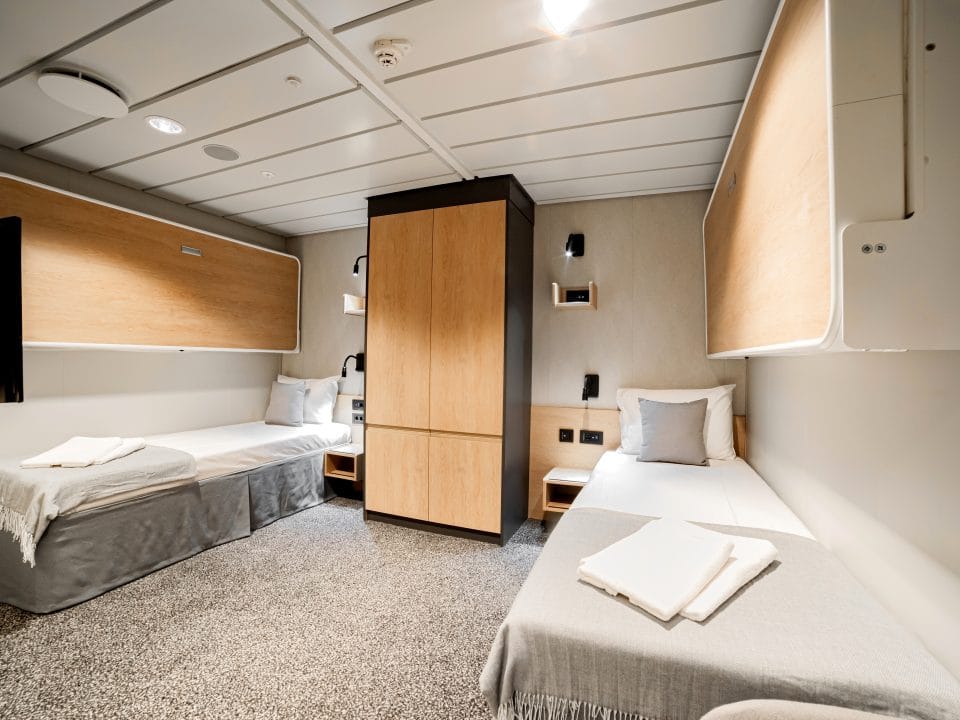
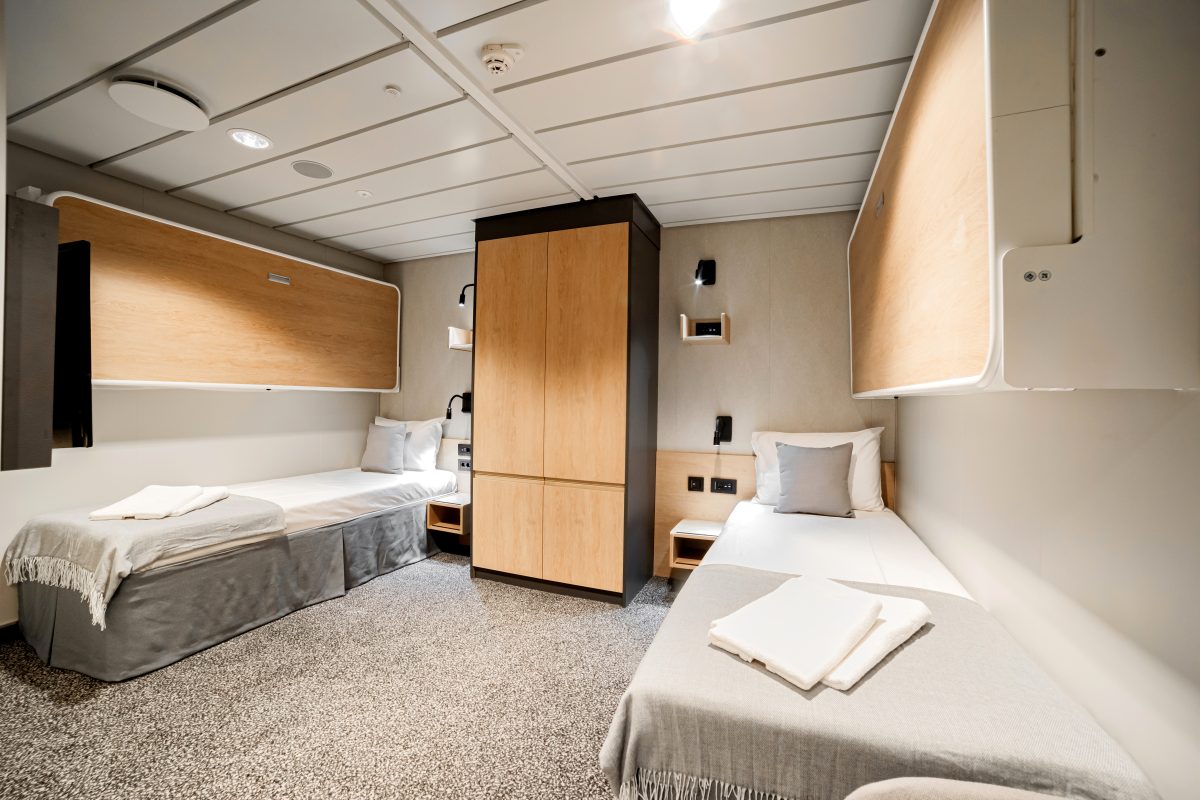
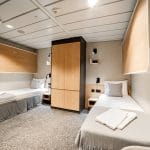
Crew areas are sometimes less visible than passenger spaces, but they are critical for the vessel’s daily performance. Cabins, mess rooms, changing areas, offices, laundry rooms and service spaces should support rest, work and routine operations.
In older ferries, crew accommodation may become outdated or inefficient. Storage may be limited, surfaces may be worn, acoustic comfort may be weak and service areas may no longer support current operational needs. Refurbishment gives the project team a chance to improve these spaces without changing the vessel’s main structure.
Crew areas should be designed for practical use. Durable materials, easy maintenance, clear storage and controlled circulation matter more than decorative complexity. In many RoPax refit projects, improving crew accommodation also supports morale, efficiency and long-term usability.
A relevant example is the Stena Europe RoPax ferry project, where crew deck refurbishment, cabins, recreation areas, galley and laundry spaces were part of the interior scope.
Material Selection in Ferry Refit Interiors
Material selection in refurbishment projects must respond to both existing conditions and future use. Ferry interiors need materials that can handle traffic, cleaning, moisture, impact and long service periods.
Common material priorities include:
- Durable flooring for high-traffic areas
- Fire-rated wall and ceiling systems
- Moisture-resistant finishes
- Easy-to-clean surfaces
- Acoustic and thermal comfort
- Impact-resistant corners and trims
- Practical furniture materials
- Safe fixing details
The best material is not always the most expensive option. It is the one that fits the area, use intensity, maintenance routine and installation limits. A passenger lounge, crew corridor, wet unit and galley-adjacent space each need a different performance balance.
Material decisions should also consider installation timing. In a refit project, there may be limited time to remove old systems, prepare surfaces and install new materials before the vessel returns to service.
Working Within Existing Vessel Limits
A ferry refit project rarely starts from a blank page. Existing structures, dimensions, system routes and past modifications shape what is possible. This makes technical coordination essential.
Interior teams need to understand what lies behind walls, ceilings and flooring before making final decisions. Electrical routes, HVAC systems, piping, insulation and access panels may limit design changes. In some cases, the best solution is not a complete redesign, but a carefully planned upgrade that respects the existing vessel.
This is where experience matters. A visually simple change may create technical conflicts if it blocks maintenance access or changes installation sequence. A new wall panel system may need to align with old door frames. A refurbished wet unit may require drainage, ventilation and waterproofing checks.
Good refit planning protects both design quality and technical reliability.
Onboard Installation and Schedule Control
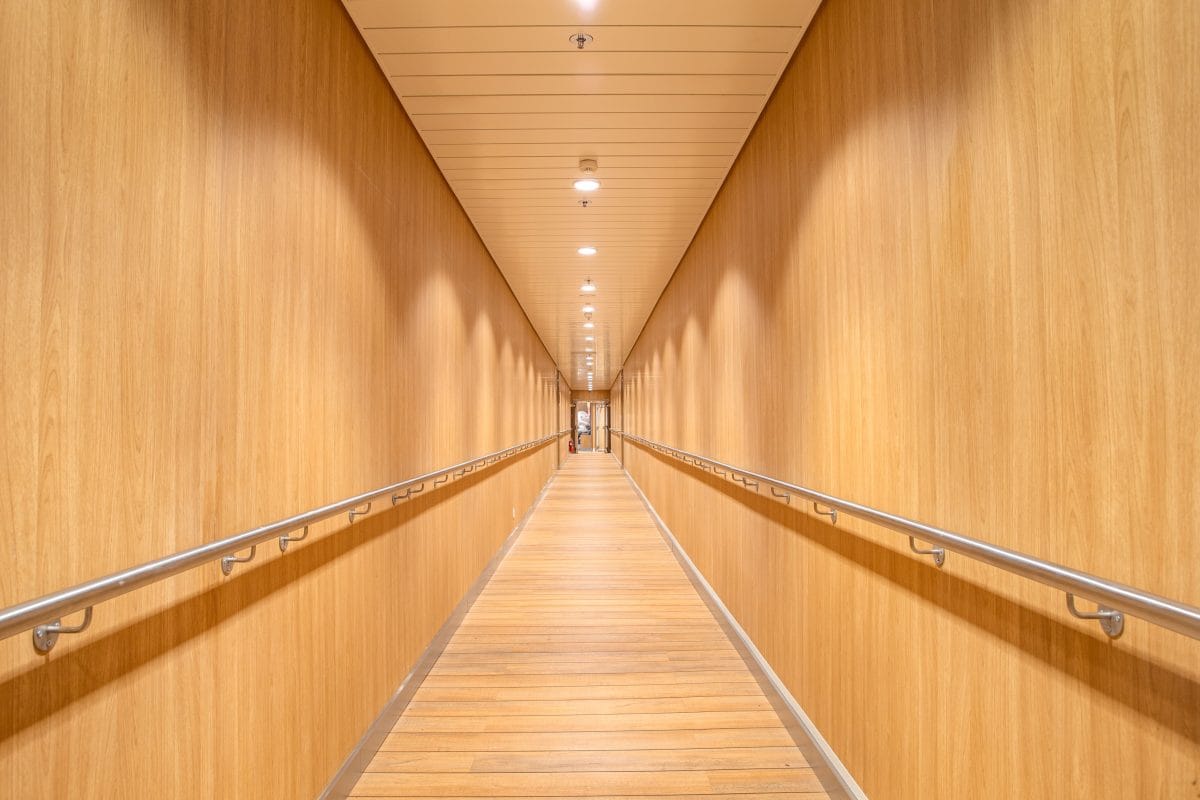
Time is one of the biggest challenges in ferry refurbishment. RoPax and passenger ferries are commercial vessels, so downtime needs to be controlled. Interior works must be planned around shipyard schedules, material delivery, access limits and other technical teams.
Onboard installation should follow a clear sequence. Demolition, surface preparation, material delivery, protection, installation, quality checks and handover need to be coordinated. If work areas are not planned carefully, teams can block each other and cause delays.
A controlled installation plan should define:
- Which spaces are handled first
- How old materials are removed
- Where new materials are stored
- How surfaces are protected
- Which teams need access to the same areas
- When final checks take place
In ferry refit projects, workmanship quality is visible not only in finishes but also in alignment, access, durability and how well the interior performs after delivery.
Balancing Cost, Quality and Service Life
Refurbishment projects need realistic priorities. Not every space requires the same level of intervention. Some areas may need full replacement, while others may benefit from targeted upgrades. The strongest result often comes from balancing cost, quality and expected service life.
A smart refit strategy can help owners improve comfort and usability without unnecessary replacement. This requires understanding which elements are still functional, which ones create maintenance problems and which upgrades will have the greatest operational value.
The decision should not be based only on appearance. A worn passenger lounge may affect brand perception. A poorly planned crew area may affect daily work. A damaged wet unit may increase maintenance risk. Each space should be evaluated according to its function.
FAQ
What is ferry interior refurbishment?
Ferry interior refurbishment is the renewal or upgrade of onboard spaces such as lounges, cabins, corridors, wet units, crew areas, service zones and public areas. The aim is to improve comfort, safety, durability and usability.
How is a RoPax ferry refit different from a newbuild project?
A newbuild project starts with a new structure, while a refit works within an existing vessel. RoPax ferry refit projects must consider old materials, existing systems, limited access and shorter schedules.
Which areas are usually refurbished in ferry interiors?
Passenger lounges, seating areas, cabins, crew accommodation, restaurants, corridors, toilets, galley-adjacent spaces, laundry rooms and service areas are commonly included in ferry interior refurbishment projects.
Extending Ferry Life Through Better Interiors
Ferry interior refurbishment can extend the useful life of a RoPax or passenger ferry while improving comfort, durability and daily operation. The best results come from a clear condition assessment, practical material selection, strong technical coordination and controlled onboard installation.
Accomar works on marine interior refurbishment and vessel accommodation projects where existing interiors need to be renewed without losing sight of shipyard realities and operational needs. Project teams can contact Accomar through the contact page to discuss ferry refit and interior refurbishment requirements.