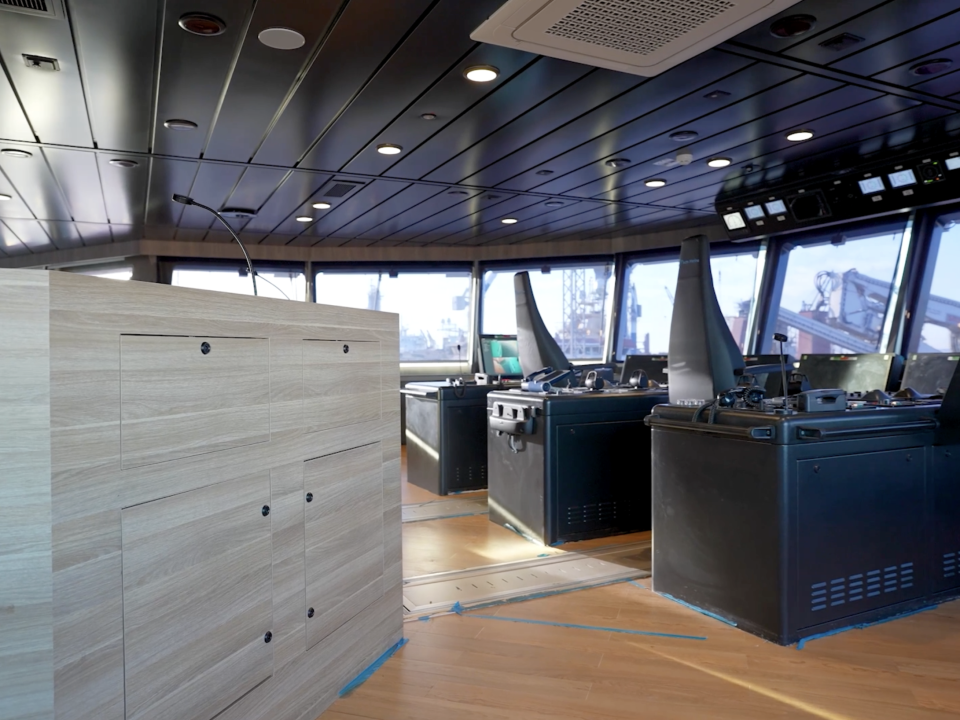
How Is the Mock-up Process Managed in Marine Interiors?
How Are Offshore Service Operation Vessel Interiors Planned?
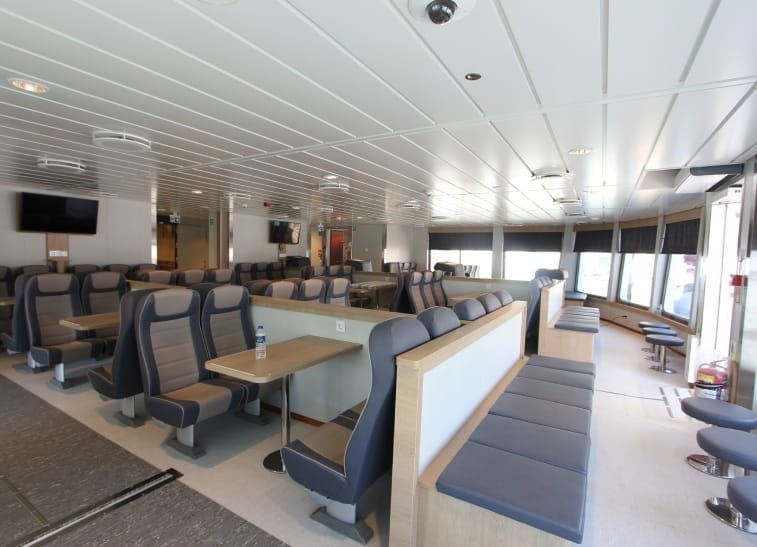


Electric and hybrid ferries are changing more than propulsion systems. Battery rooms, energy storage systems, charging infrastructure, new safety requirements and weight distribution targets also influence how interiors are designed, built and installed. For shipyards, owners and marine interior teams, the transition toward low-emission ferry operations creates new planning priorities across passenger areas, crew accommodation, service zones and technical spaces.
Interior planning for conventional ferries often begins with passenger capacity, seating layout, service flow and crew needs. In electric and hybrid ferry projects, those criteria remain critical, yet the interior must also respond to machinery arrangement, battery integration, thermal management, fire safety zoning, noise expectations and energy efficiency targets. The result is a more connected relationship between naval architecture, engineering and marine interior outfitting.
Accomar works across newbuild and refurbishment projects with turnkey accommodation solutions, procurement, supply chain management, workmanship, onboard installation and technical coordination. In ferry projects, interior planning becomes stronger when accommodation areas, wall systems, insulation, ceilings, flooring, furniture and installation sequences are evaluated as one integrated scope.
A New Relationship Between Propulsion and Interior Layout
Electric and hybrid propulsion systems affect the technical structure of a ferry. Battery systems and hybrid machinery may change the way internal volumes are allocated. Some areas need direct technical access. Some zones require stronger separation, insulation or fire protection. Some routes must remain open for maintenance teams.
Those changes influence accommodation and passenger spaces. A seating area, corridor, crew room or service zone cannot be planned separately from the technical arrangement of the vessel. Interior layouts need to respect equipment access, ventilation routes, cable pathways and emergency procedures.
Electric ferry interior design should therefore begin with technical coordination. Interior teams need to understand where systems are located, how maintenance access will be handled and how outfitting components will interact with structural and technical elements. Accomar’s marine interior technical coordination approach supports projects where interior architecture and engineering requirements need to move together.
Weight Control Becomes More Sensitive
Weight control is always important in ferry projects. In electric and hybrid ferries, it becomes even more sensitive because batteries and related systems add weight and occupy space. Interior materials, furniture, flooring, ceilings and wall panels should be reviewed with the wider vessel weight strategy.
A heavy interior package can reduce efficiency or create pressure on design limits. A lightweight interior with weak durability can increase maintenance risk. The correct approach is not simply reducing material thickness. It requires controlled material selection, strong detailing and installation methods that support both performance and long-term use.
Interior teams should review:
- Flooring system weight
- Wall and ceiling panel selection
- Furniture construction
- Insulation material performance
- Fixing and support details
- Repeated cabin or seating modules
- Logistics and installation handling
Marine accommodation outfitting in electric and hybrid ferries should balance weight, durability, safety and comfort. Accomar’s experience in turnkey marine outfitting for NB1130 Fjord1 demonstrates how ferry accommodation and interior fit-out scopes can be approached as part of advanced vessel projects.
Passenger Areas Need Efficient Flow
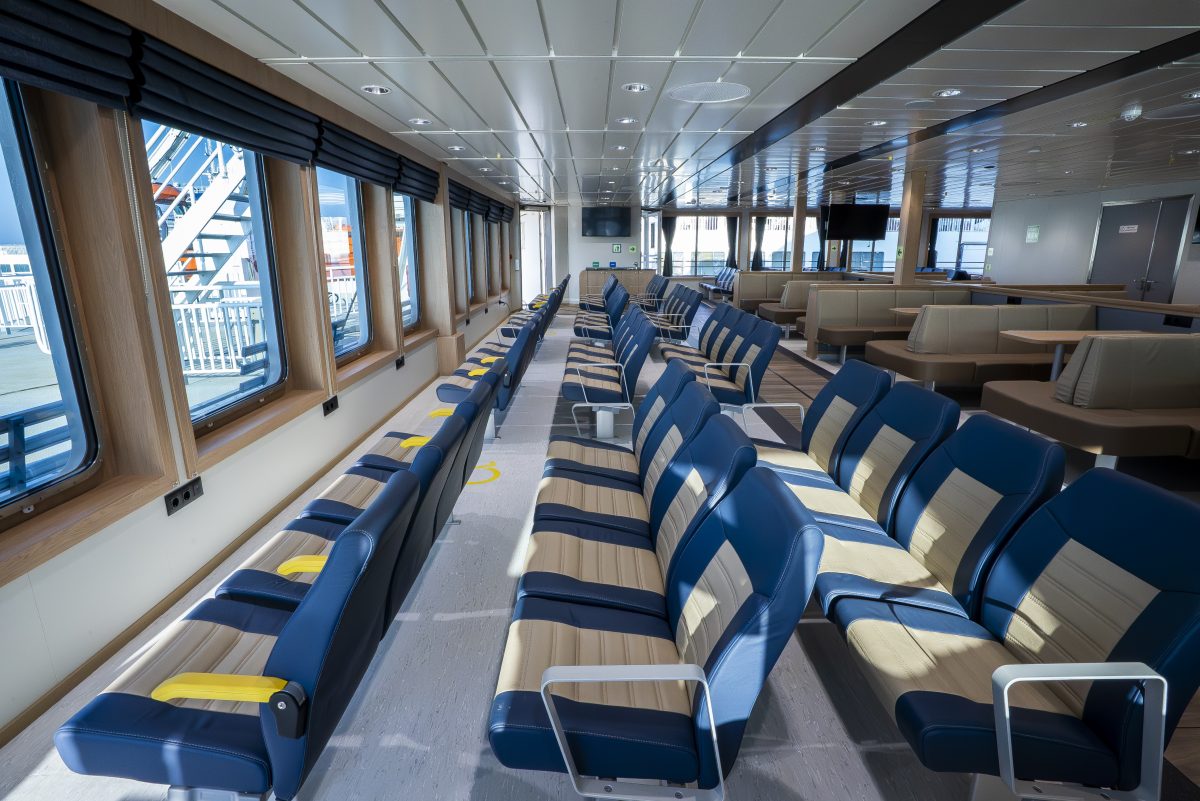
Ferries operate on short, frequent and time-sensitive routes. Passenger areas must support quick boarding, clear movement, safe waiting and efficient disembarkation. Electric and hybrid systems do not remove those operational needs. They make planning discipline even more valuable.
Passenger spaces should be planned around circulation, seating density, accessibility, luggage movement, service points and emergency access. Interior design should avoid unnecessary barriers and heavy visual clutter. Clear routes help passengers move more easily while supporting crew operations.
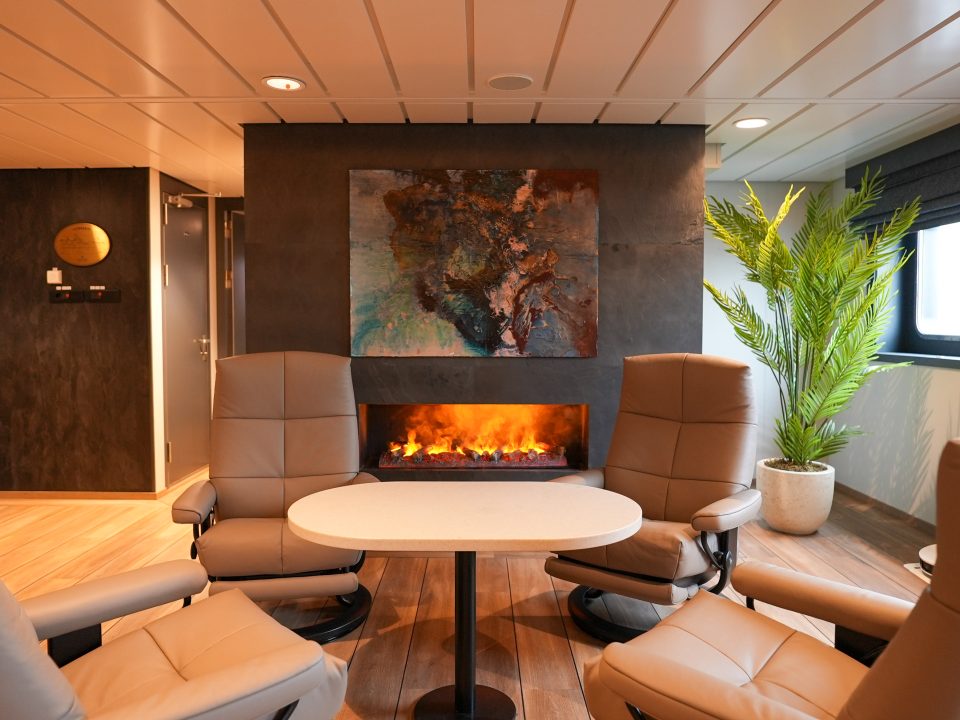
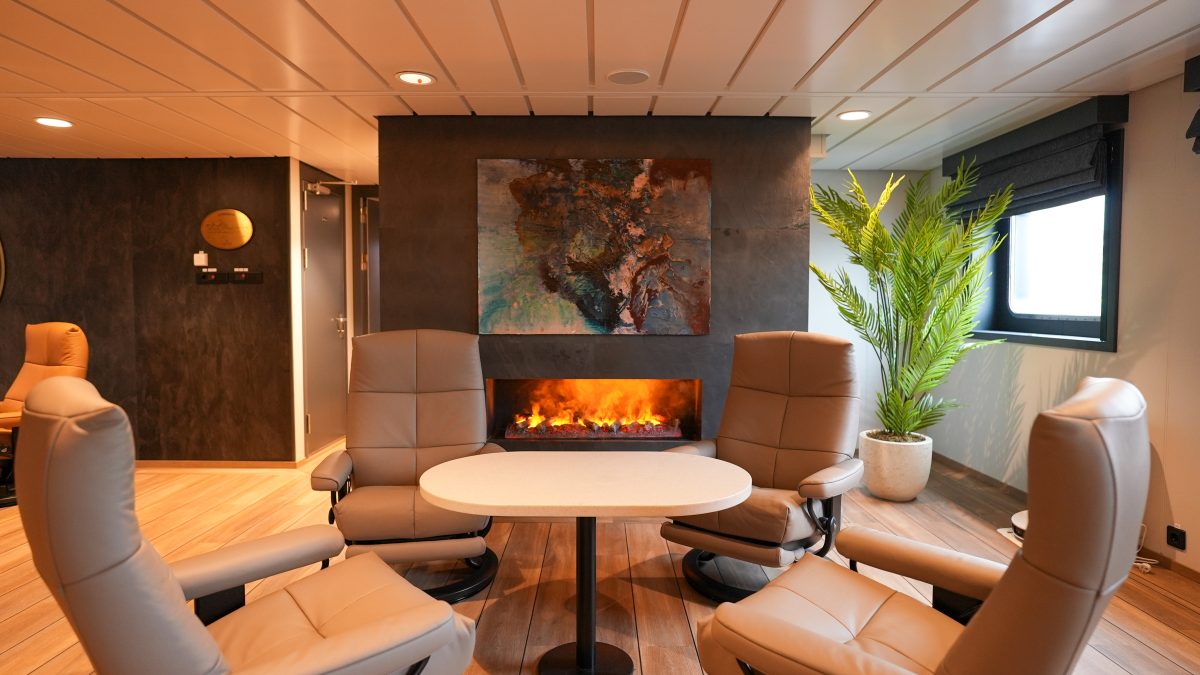
Modern ferry interiors may include open seating zones, quiet areas, family areas, accessible seating, café or retail points and information zones. Each area requires different furniture and material decisions. Flooring must support high traffic. Wall panels and ceilings must be durable and easy to maintain. Seating should balance comfort, weight and cleanability.
For Accomar, ferry interior outfitting is not only a visual task. It connects technical planning, material procurement, onboard workmanship and final installation quality.
Crew Accommodation and Working Areas Matter
Electric and hybrid ferries are often discussed through energy systems and sustainability targets. Crew spaces deserve the same level of attention. Crew members need safe, practical and comfortable areas that support daily operation. Onboard routines, rest periods, storage, service access and hygiene requirements should shape the accommodation layout.
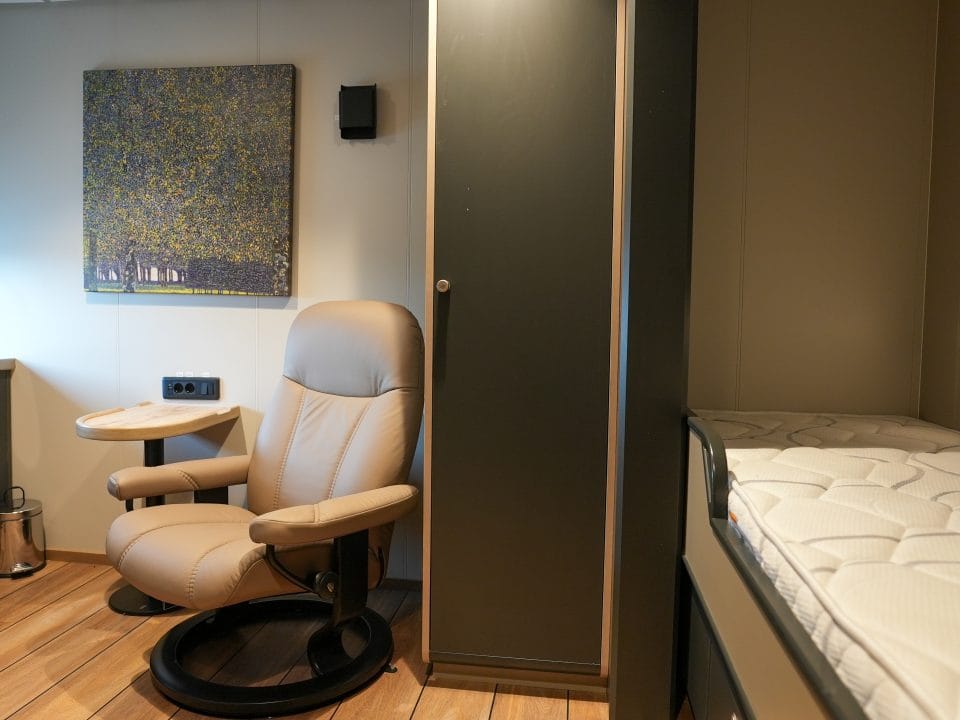
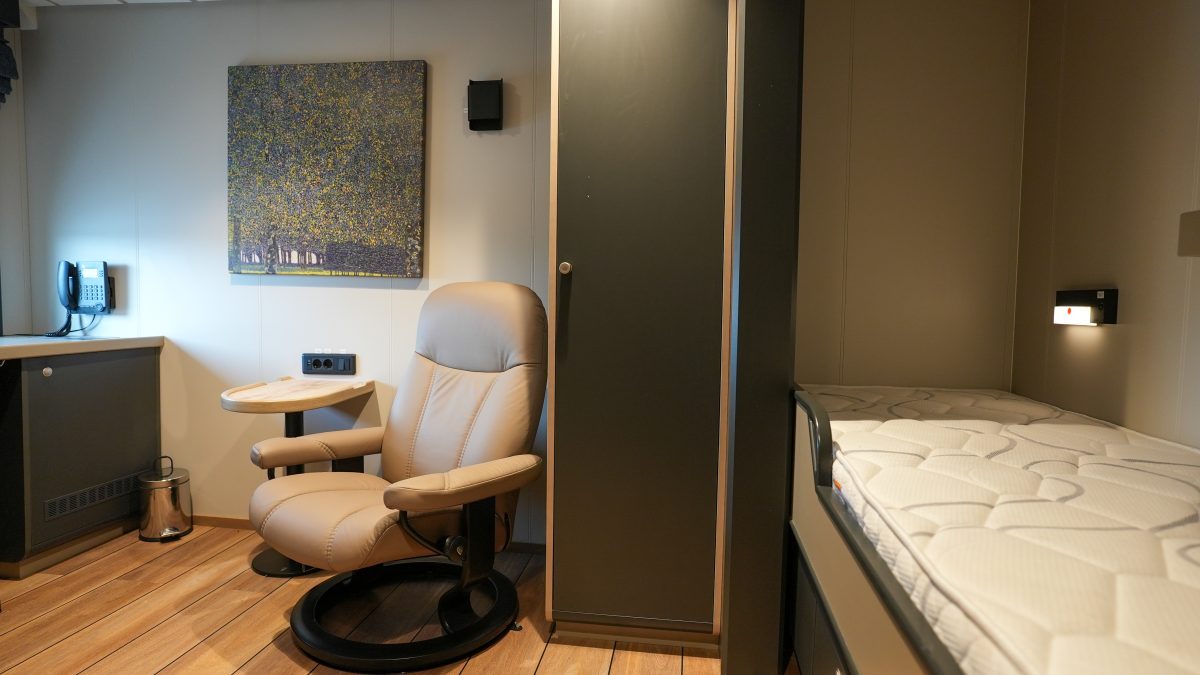
Crew accommodation may include cabins, mess rooms, changing rooms, sanitary areas, offices, storage rooms and service corridors. Each zone needs materials and details suitable for intensive use. In hybrid and electric vessels, technical teams may also require easier access to monitoring areas, service panels and equipment-related spaces.
Accomar’s ferry and vessel experience covers accommodation spaces where daily usability is as important as finish quality. Projects such as Hinnøy, a fully battery-powered double-ended ferry, show how accommodation outfitting can support the operational profile of advanced ferry projects through insulation, walls, ceilings, flooring and installation work.
Acoustic Comfort and Vibration Expectations Change
Electric propulsion can change the acoustic profile of a vessel. Reduced engine noise may improve passenger comfort, yet it can also make other sounds more noticeable. HVAC noise, door movement, foot traffic, furniture vibration and service area sounds may become more apparent in quieter interiors.
For that reason, interior planning should include acoustic performance from the early design stage. Wall systems, flooring, ceilings, insulation and furniture details all contribute to perceived comfort. A quiet ferry interior is not created by propulsion alone. It depends on material selection and workmanship quality.
Interior outfitting for electric and hybrid ferries should consider acoustic balance in passenger lounges, crew areas, corridors and service zones. Proper insulation and precise installation reduce unwanted noise transmission and support a more comfortable journey.
Fire Safety, Materials and System Integration
Battery and hybrid systems require careful safety planning across the vessel. Interior areas must be coordinated with fire safety requirements, escape routes, compartmentalization and technical access. Materials used in accommodation and passenger spaces should be selected according to marine standards and project specifications.
Interior material planning may cover:
- Fire-rated wall and ceiling systems
- Flooring suitable for high traffic
- Moisture-resistant surfaces
- Durable and cleanable finishes
- Insulation performance
- Low-maintenance furniture materials
- Secure fixing details
- Access panels for inspection and maintenance
Accomar’s services include interior architecture, concept design, procurement, workmanship and ship assembly. In electric and hybrid ferry projects, those stages should be coordinated with the technical requirements of the vessel to protect safety and long-term usability.
Refit Projects Require Careful Assessment
Not every electric or hybrid ferry project is a newbuild. Some vessels may undergo refurbishment, modernization or conversion to support new operating targets. Refit projects bring different challenges because existing structures, old systems, limited access and time constraints affect interior decisions.
During ferry refit, project teams should assess which interior elements can remain, which systems need replacement and which spaces require full renewal. Flooring, ceilings, wall panels, insulation, furniture and service areas may need updates depending on the new technical scope.
Hybridization or electrification can create changes in technical areas, routing and safety requirements. Interior teams need to coordinate closely with engineering teams to avoid late-stage conflicts. Accomar’s experience in newbuild and refurbishment projects positions the brand for ferry interiors where planning, supply chain and onboard installation need to be managed together.
Procurement and Installation Timing
Electric and hybrid ferry projects often involve strict schedules. Charging infrastructure, battery systems, technical commissioning and vessel delivery milestones create pressure across all disciplines. Interior outfitting must be planned around procurement timing, material lead times and onboard access.
Procurement should not be treated as a late operational step. Material availability, certification needs, transport timing and installation sequence can affect the entire project. Accomar’s procurement and supply chain management service supports marine interior projects where materials, logistics and installation readiness need controlled coordination.
Correct installation timing prevents damage, rework and access conflicts. Onboard installation teams should enter the project with clear drawings, protected materials, defined work zones and coordination with other contractors.
FAQ
Do electric ferries require different interior planning?
Yes. Electric ferries may include battery systems, charging-related equipment, technical access routes and different safety requirements. These factors can influence layout, material selection, weight control and installation planning.
Are hybrid ferries harder to design than conventional ferries?
Hybrid ferries can require more coordination because conventional machinery, battery systems and electrical infrastructure may exist together. Interior teams need to work closely with engineering and shipyard teams.
Why is weight important in electric and hybrid ferry interiors?
Battery and energy systems can add significant weight. Interior materials, furniture and outfitting components should be planned carefully to support vessel efficiency, durability and passenger comfort.
Planning Interiors for the Next Generation of Ferries
Electric and hybrid ferries require interior planning that connects technical systems, passenger experience, crew accommodation, material performance and onboard installation. The best results come when interior outfitting is considered from the earliest project stages, not after the main technical decisions are completed.
Accomar brings marine interior outfitting, accommodation solutions, procurement, technical coordination and onboard installation experience together for newbuild and refurbishment projects. For ferry interiors that need to balance sustainability, comfort, safety and operational efficiency, project teams can contact Accomar through the contact page to discuss project-specific marine accommodation and interior outfitting requirements.