Marine Interior Repair Services and Modernization for Commercial Vessels

Interior Architecture Strategies Combining Luxury and Durability in Cruise Ships

In marine engineering, interior outfitting is not only an aesthetic consideration but also a critical weight factor that directly influences vessel stability and operational performance. Excessive interior weight increases the vessel’s center of gravity and may negatively affect stability margins, fuel efficiency, and overall seakeeping behavior.
For this reason, the selection of lightweight marine materials has become a technical requirement in modern shipbuilding and refit projects.
As ACCOMAR, we focus on advanced material technologies and engineering-driven solutions that protect structural integrity, improve stability characteristics, and extend vessel service life under demanding marine conditions.
Impact of Lightweight Materials on Vessel Stability and Capacity
Reducing interior outfitting weight provides naval architects with greater flexibility during the design phase. Even moderate weight savings in accommodation and public areas contribute to a lower center of gravity, resulting in improved vessel stability and safer operating conditions at sea.
For commercial vessels, optimized weight distribution allows increased payload capacity, whether in terms of cargo, passengers, or operational equipment, without compromising regulatory safety limits.
In addition, lightweight panels, ceiling systems, and modular components simplify transportation and handling during installation. This improves installation speed and reduces labor intensity in shipyard outfitting processes.
Durability in Harsh Marine Conditions: Marine-Grade Material Standards
Marine interiors are continuously exposed to aggressive environmental factors such as saltwater, high humidity, temperature fluctuations, and constant vibration. Conventional materials may absorb moisture, deform, or corrode over time, leading to frequent maintenance and premature replacement.
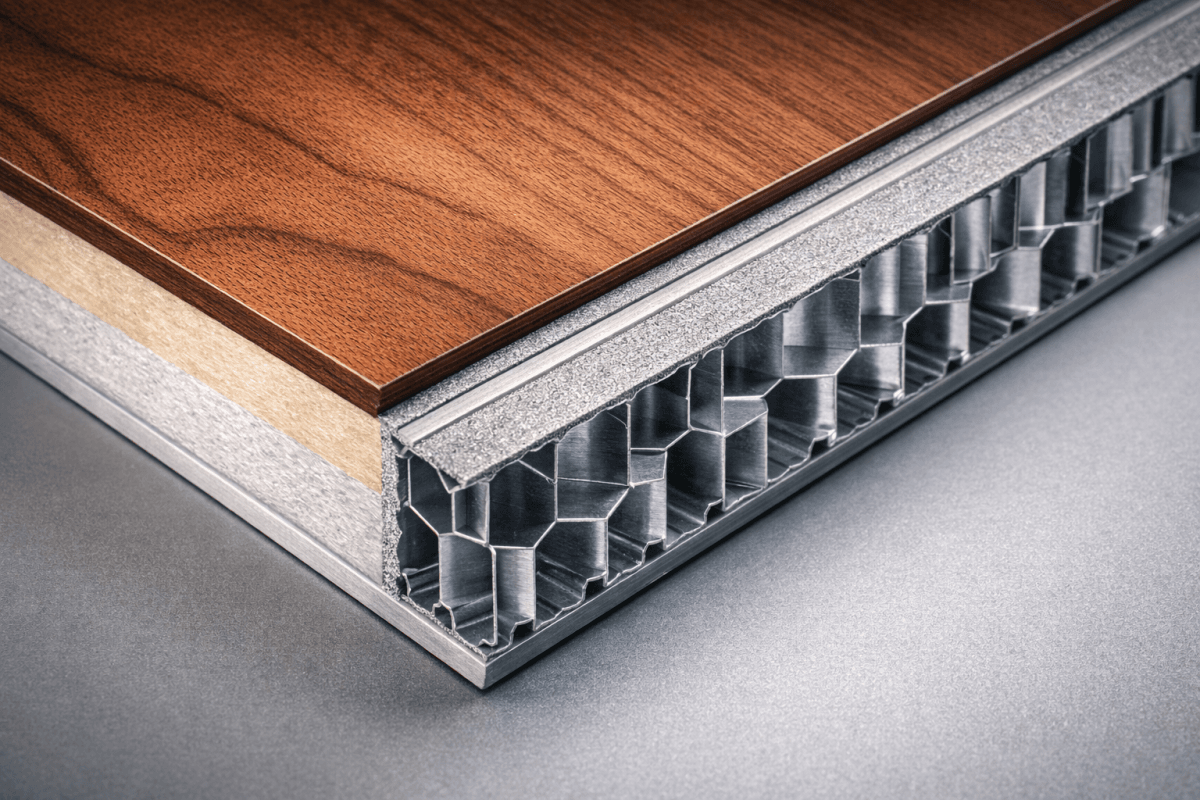
Aluminum honeycomb panels and advanced composite materials used in ACCOMAR projects provide high resistance to corrosion and dimensional deformation. These materials maintain their mechanical properties and surface quality throughout the vessel’s operational lifecycle.
Despite their lightweight structure, they offer high impact resistance and durability, even in high-traffic accommodation and circulation areas.
Engineering Performance and Acoustic Comfort
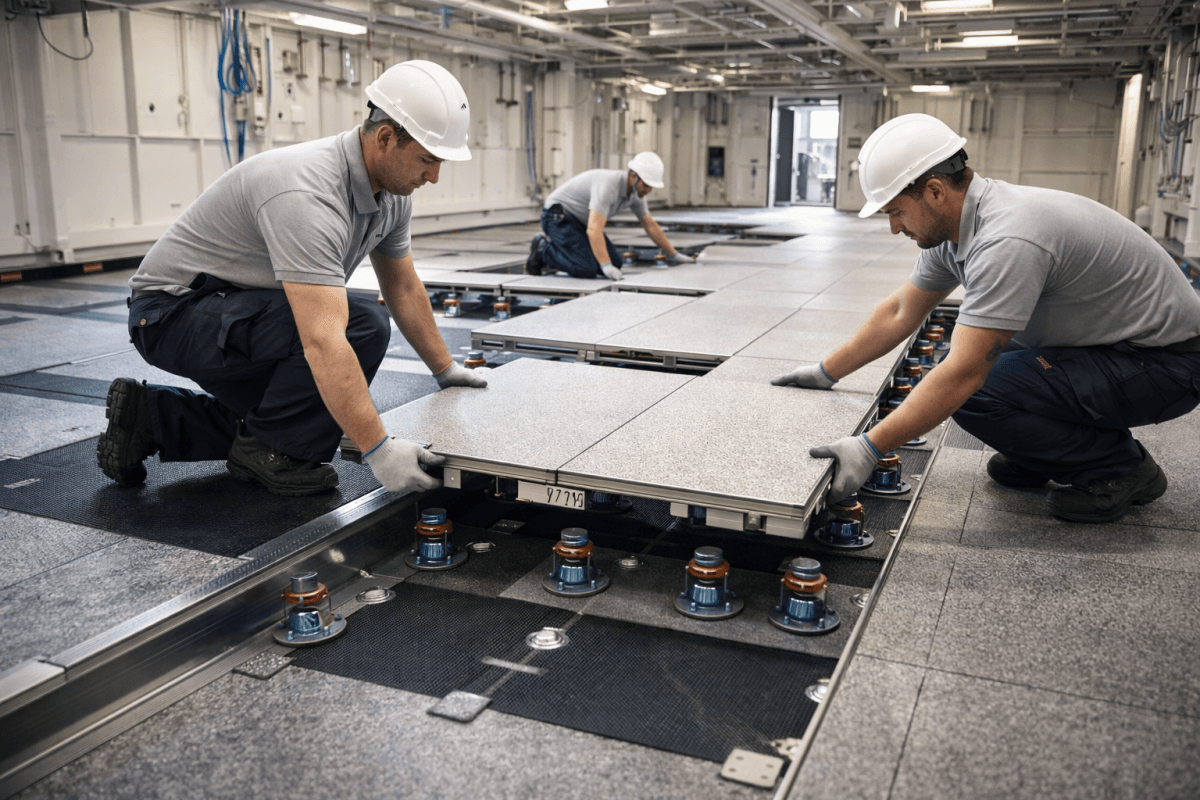
Effective marine interior engineering must address both structural performance and onboard comfort. Noise and vibration generated by propulsion systems, auxiliary machinery, and hull movement can significantly affect living conditions if not properly controlled.
Lightweight sandwich panels, floating floor systems, and vibration-damping assemblies selected through proper engineering calculations reduce structure-borne noise transmission. When integrated from the early design stage, these systems contribute to improved acoustic comfort and long-term durability.
Through detailed engineering analysis and material selection, ACCOMAR delivers interior solutions that balance weight efficiency, noise control, and structural reliability, creating comfortable and sustainable living environments onboard.
Conclusion: Operational Efficiency and Long-Term Value
The use of lightweight marine materials directly supports vessel stability, installation efficiency, and lifecycle performance. When combined with advanced engineering solutions and marine-grade material standards, interior outfitting becomes a performance-driven system rather than a purely aesthetic layer.
By prioritizing weight optimization, corrosion resistance, and acoustic performance, shipowners and shipyards can achieve safer, more efficient, and longer-lasting marine interior solutions.