Best Time to Cruise: Month-by-Month Pros & Cons Guide
Narrowboat Interior Design Ideas: Smart Solutions and Space-Saving Tips

As the maritime industry continues to evolve, innovation in design has become inseparable from sustainability. Today, the value of a vessel is no longer measured only by its luxury or technology but by how responsibly it is built and maintained. Ship interiors, once focused purely on aesthetics and comfort, are now expected to reflect environmental awareness, efficiency, and long-term durability.
From passenger ships to cruise liners and research vessels, sustainability has become the defining force shaping the future of marine interiors. At Accomar Marine Interior, we explore five leading trends that are redefining what it means to design responsibly at sea.
1. Biophilic Design: Bringing Nature On Board
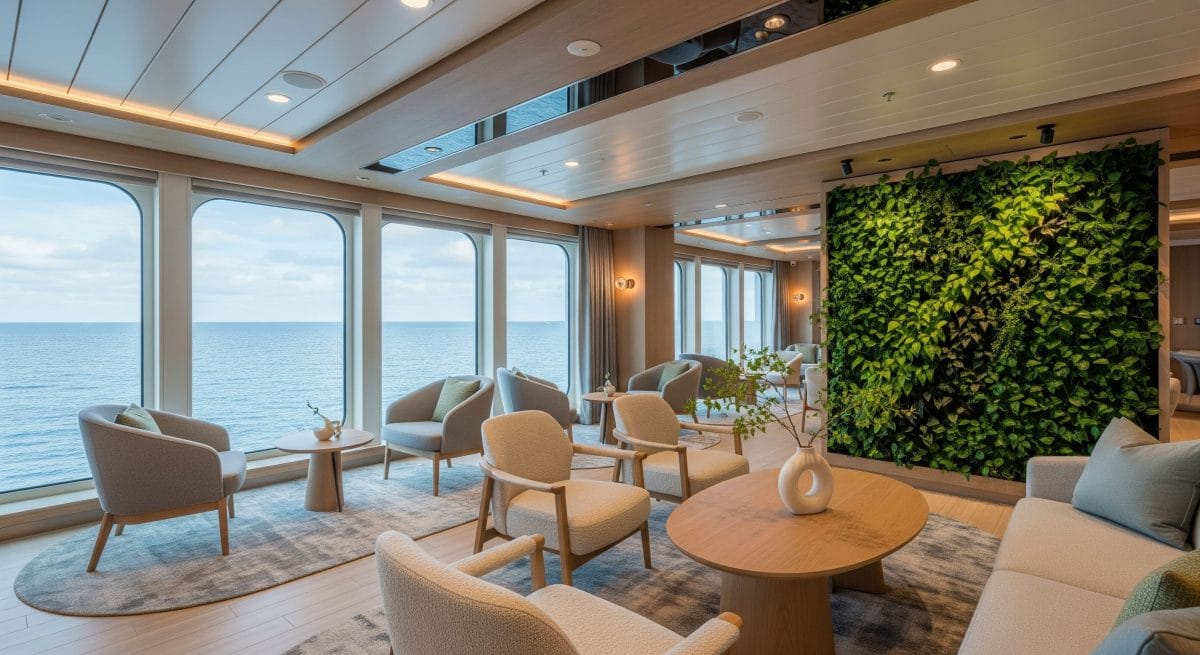
The connection between people and nature has found a new expression in the maritime world. Biophilic design integrates natural light, organic forms, and calming materials into ship interiors to create spaces that promote well-being and harmony with the sea.
Large panoramic windows, living green walls, soft neutral color palettes, and natural wood finishes transform cabins and lounges into relaxing environments. Beyond aesthetics, biophilic interiors have been shown to reduce stress and improve passenger satisfaction, which is a vital benefit for long voyages.
By prioritizing natural textures and sustainable materials, designers can create interiors that both celebrate and protect the ocean environment.
2. Recycled and Renewable Materials
Sustainable design begins with conscious material selection. In shipbuilding and refitting, the focus is increasingly on renewable and recycled resources that minimize environmental impact without compromising performance or luxury.
Marine-grade furniture and finishes now incorporate recycled metals, reclaimed wood, PET-based fabrics, and water-based coatings. Some shipyards even use surfaces made from recycled ocean plastics, turning waste into innovation.
Suppliers across the industry are responding with new collections that meet IMO fire safety standards while offering eco-friendly options. These materials tell a story in which technology and sustainability merge to redefine maritime craftsmanship.
3. Energy-Efficient Lighting and Smart Systems
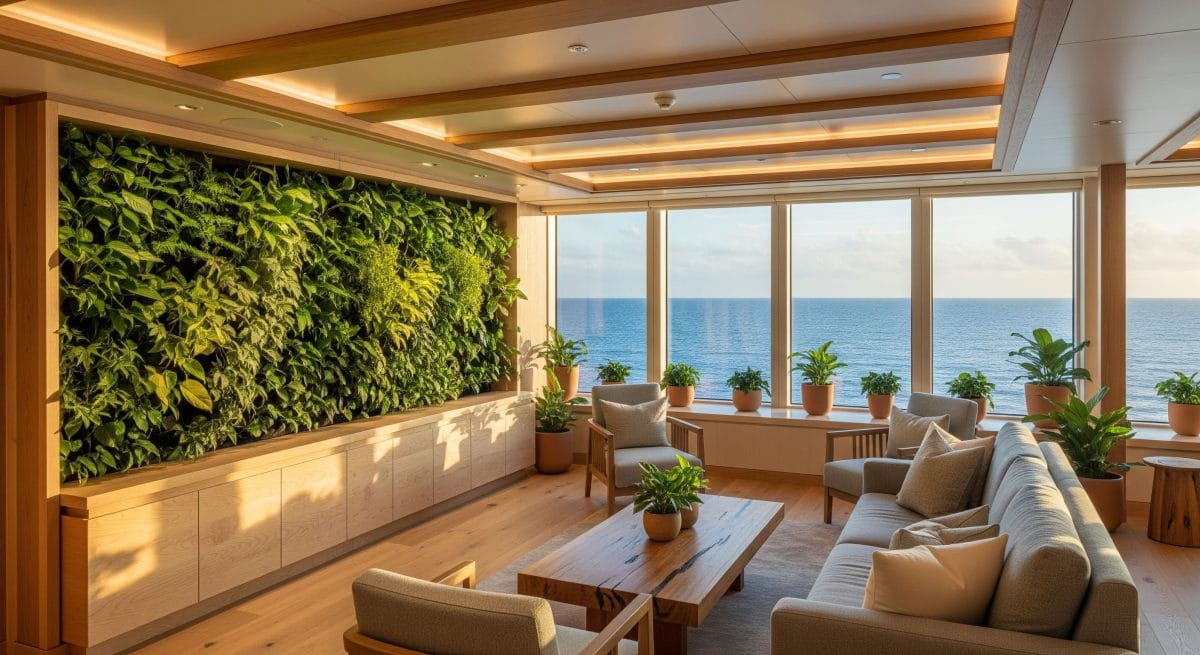
Energy efficiency is a cornerstone of sustainable ship design. Beyond the engine room, it now extends to every interior detail, from lighting to climate control.
Modern ships rely on LED lighting, motion sensors, and daylight-responsive systems to reduce energy consumption. Adaptive lighting that adjusts color temperature throughout the day enhances comfort while supporting passengers’ natural rhythms.
Centralized smart systems allow crews to manage lighting, ventilation, and HVAC settings efficiently across all decks. In design terms, efficiency becomes elegance, and smart technology ensures that sustainability is seamlessly integrated into every onboard experience.
4. Local Production and Low-Carbon Supply Chains
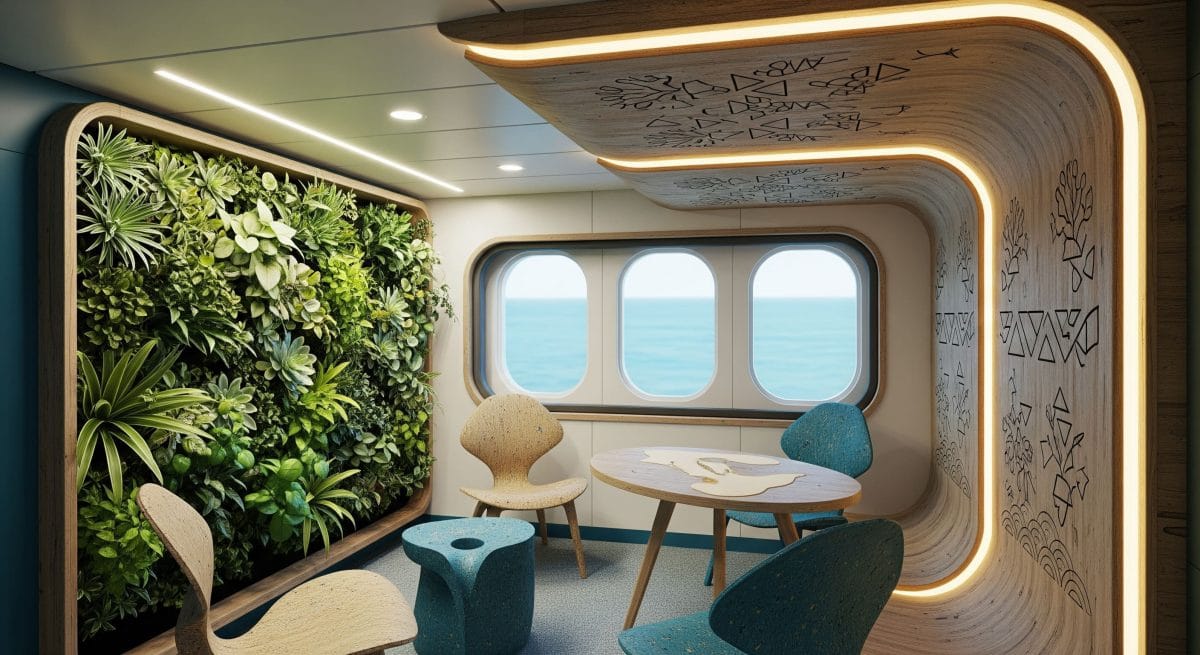
Sustainability is not only about what materials are used but also where and how they are sourced. The shift toward local production and regional partnerships has become a key focus across shipbuilding and interior design.
Shipyards and design studios increasingly collaborate with nearby suppliers, reducing transportation emissions while supporting local economies. For example, Mediterranean ship projects often feature locally quarried stone, while Nordic builds utilize regionally sourced timber.
This approach ensures both cultural authenticity and environmental responsibility, creating interiors that are contextually relevant and logistically efficient. At Accomar Marine Interior, we value this principle as part of our commitment to designing spaces that reflect the geography and identity of every vessel.
5. Modular and Long-Lasting Furniture Systems
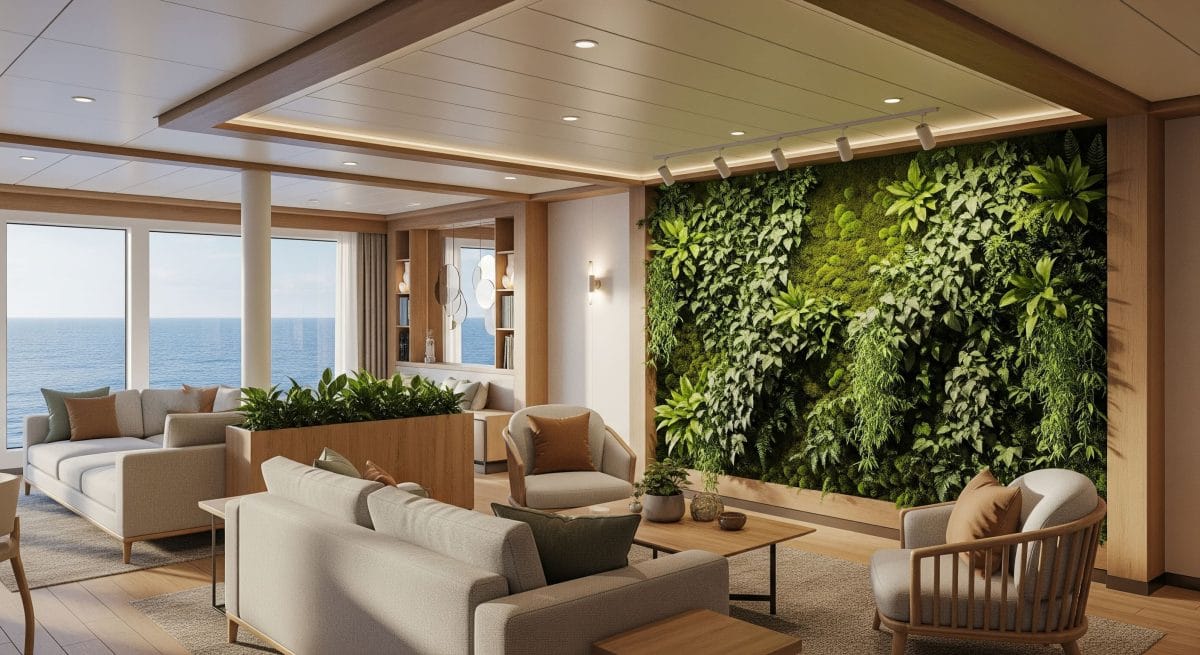
Ships are dynamic environments, constantly exposed to movement, humidity, and changing operational needs. As a result, durability and adaptability have become the hallmarks of modern marine interiors.
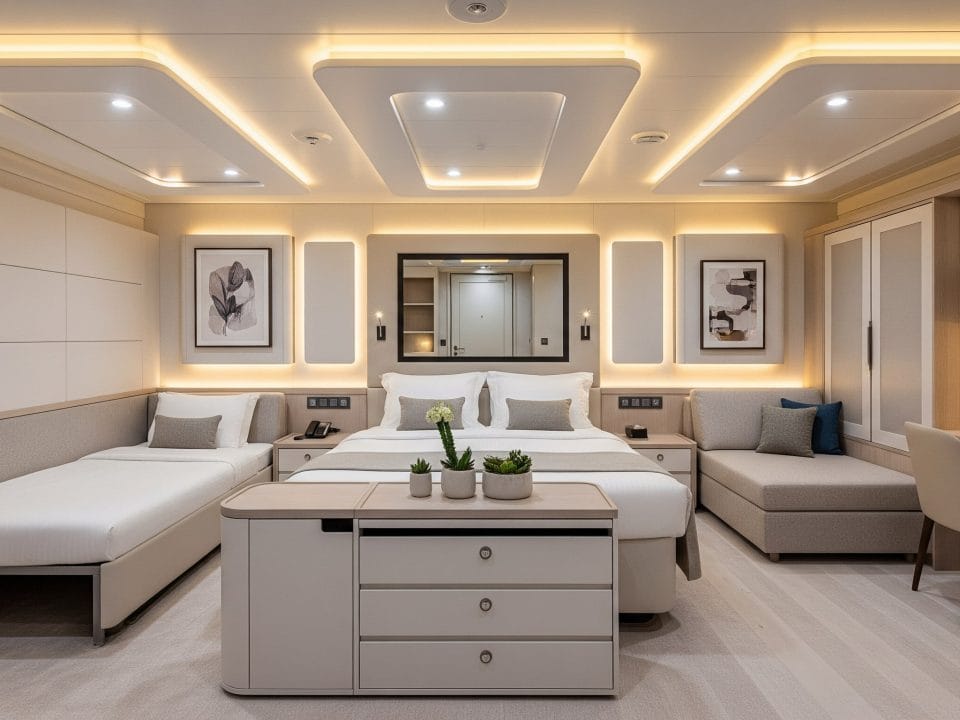
Designers now favor modular furniture systems that can be reconfigured, reupholstered, or replaced in parts rather than as a whole. This extends the lifespan of onboard furnishings, reduces waste, and simplifies maintenance.
Such flexibility allows interiors to evolve over time, which is essential for cruise ships and long-term commercial fleets that undergo regular refurbishments. In short, modular design supports both sustainability and operational efficiency, ensuring that comfort and functionality endure for years to come.
Sustainability Is the Future of Marine Interiors
Sustainable ship design is no longer a choice; it is a new standard. From material innovation to smart technology, local sourcing to biophilic integration, every element of interior design now carries an environmental responsibility.
At Accomar Marine Interior, we believe that sustainability represents more than a design trend. It is a philosophy of progress. As the maritime world embraces greener solutions, the ships of tomorrow will not only navigate the oceans but also protect them.
Sustainability is not the future of ship interiors. It is their foundation.