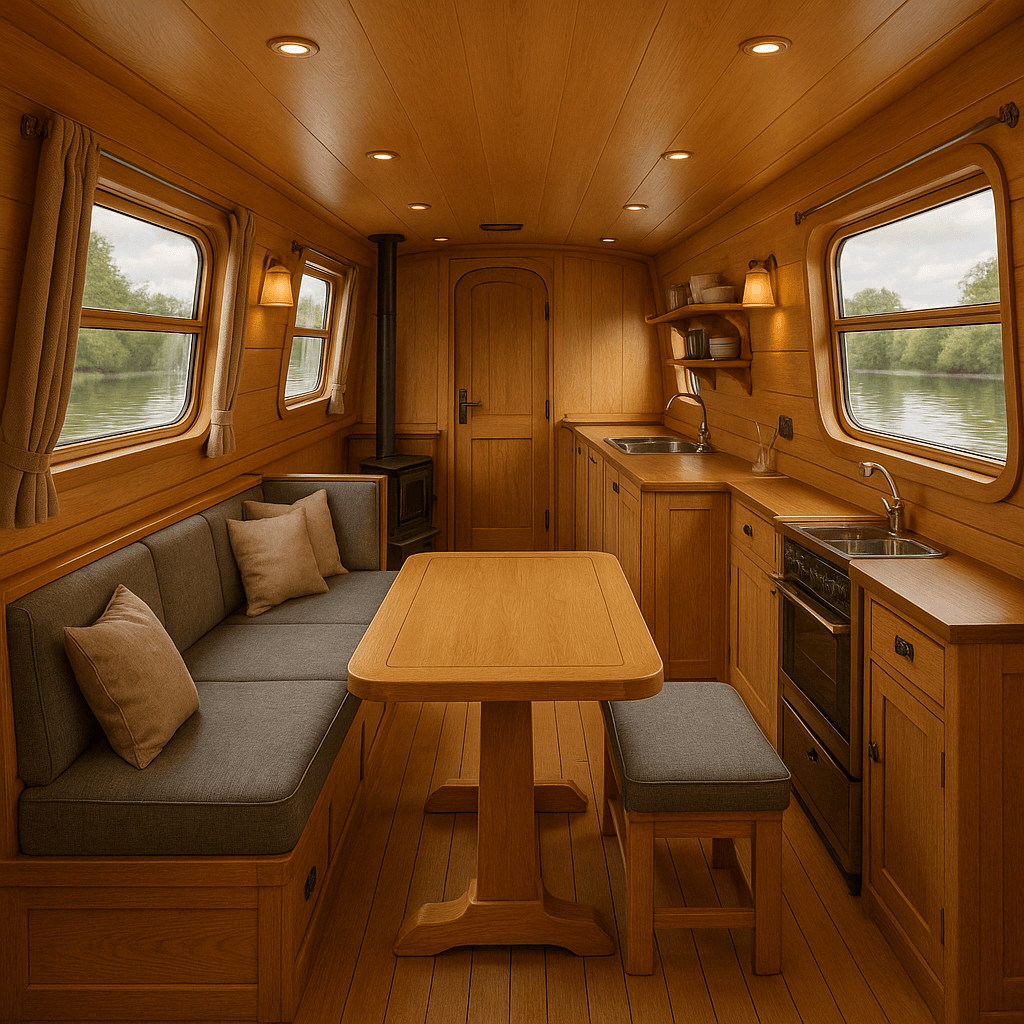
Narrowboat Interior Design Ideas: Smart Solutions and Space-Saving Tips

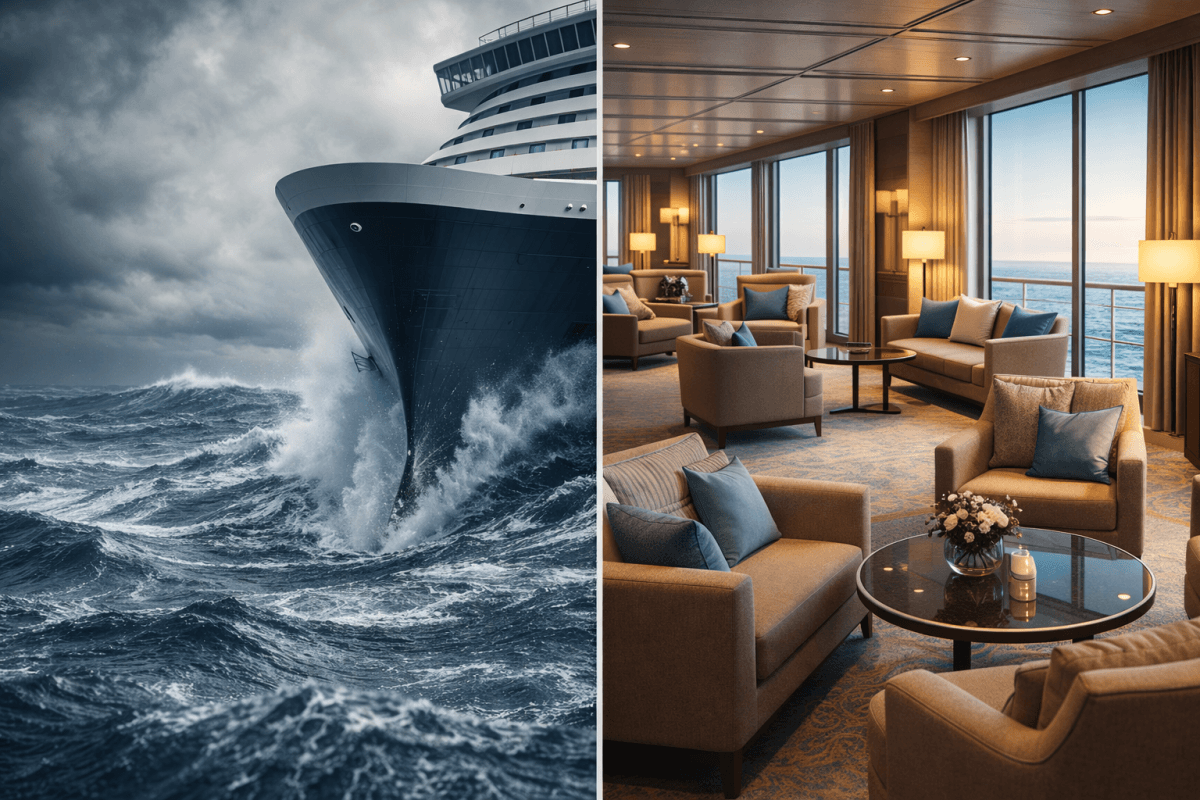
Beyond the Hull: How Hydrodynamics Influence Marine Interior Outfitting
There are many reasons why a passenger may choose an inside cabin on a cruise ship. Some travelers see their cabin simply as a place to rest they want to spend most of their time exploring and enjoying onboard activities.
For others, the choice comes down to budget. Inside cabins are typically more affordable than ocean-view or balcony cabins, leaving more room in the budget for dining, excursions, or onboard experiences.
However, over the years, inside cabins have gained a somewhat negative reputation. They are often seen as small, dark, and less attractive compared to exterior cabins. This can pose a challenge for cruise operators who must sell a certain percentage of inside cabins on each voyage.
Yet, experienced interior designers know that every challenge hides an opportunity.
With the right design strategies, inside cabins can become comfortable, stylish, and surprisingly inviting spaces.
So, how can modern ship interior design transform these compact rooms into appealing havens? Let’s explore some key design principles.
1. Creating Spaciousness Through Lighting
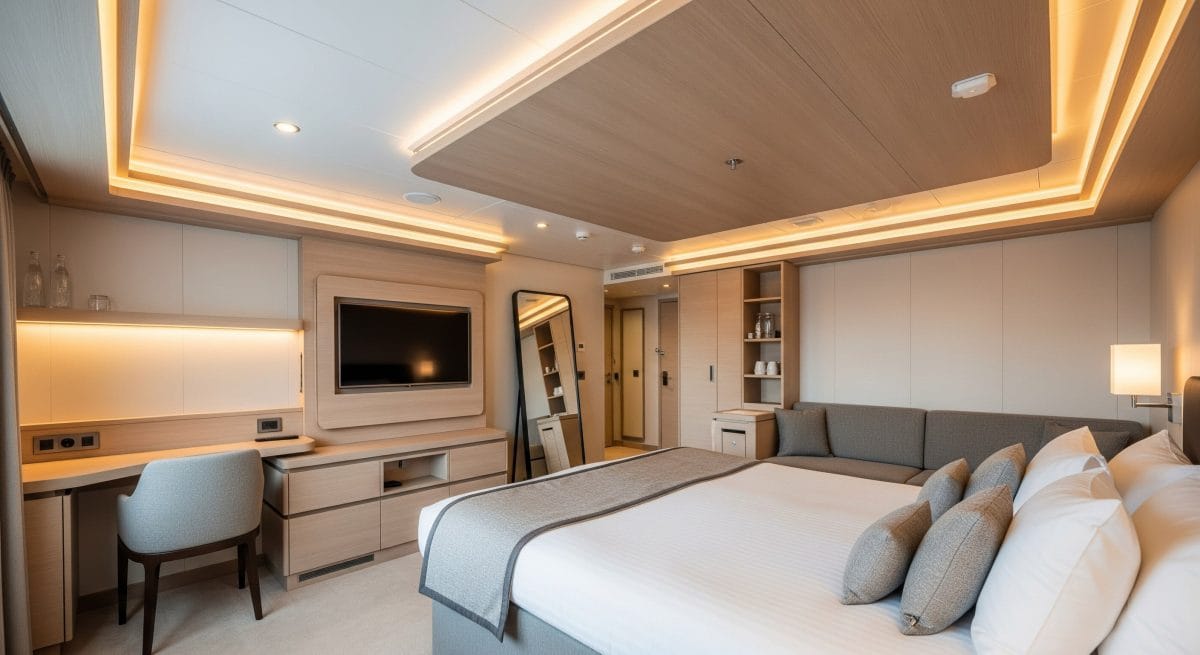
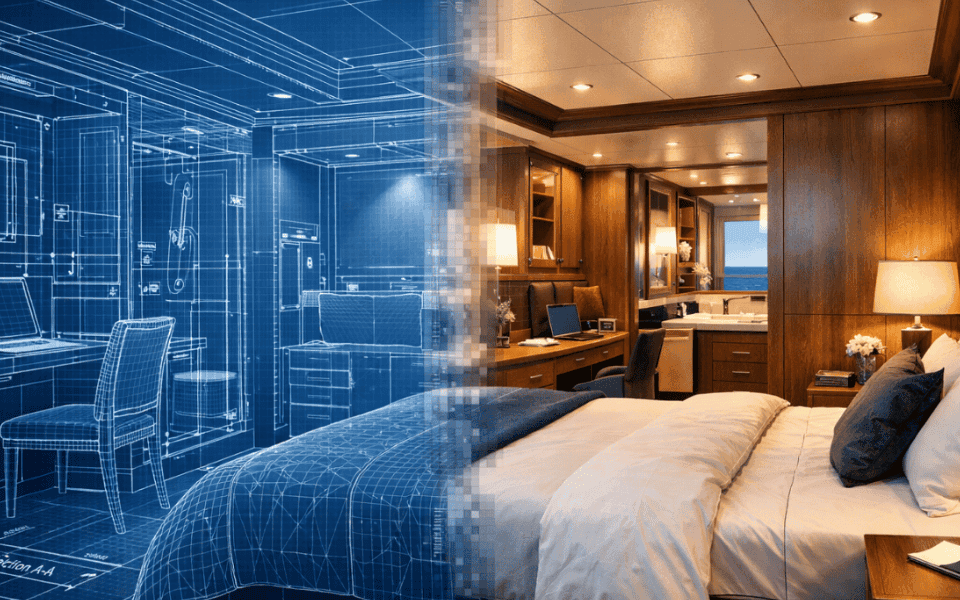
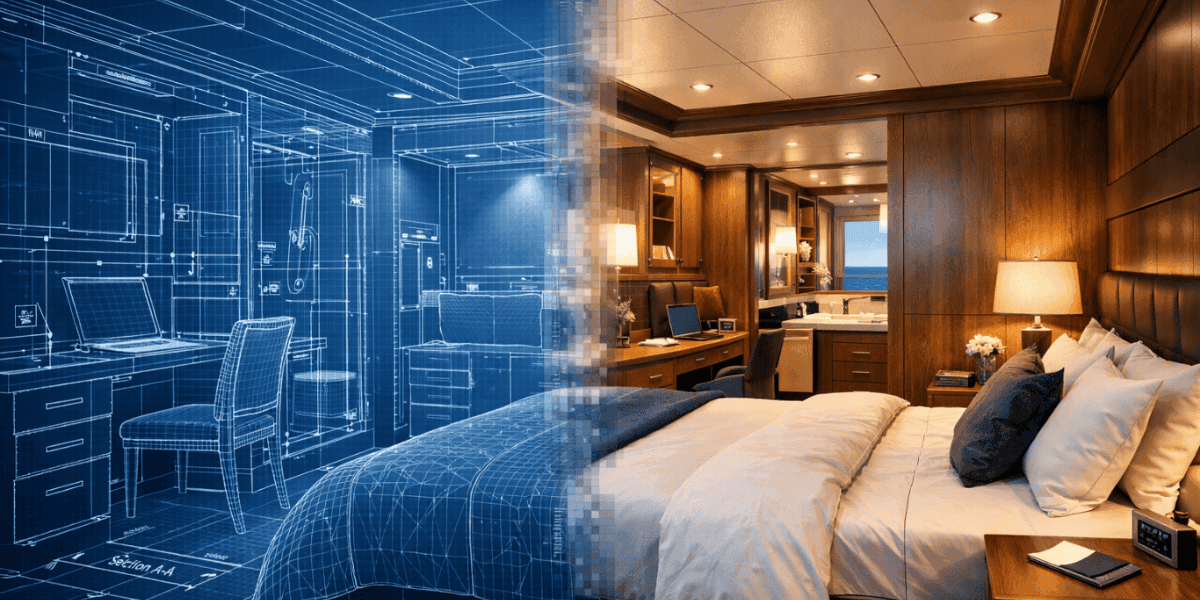
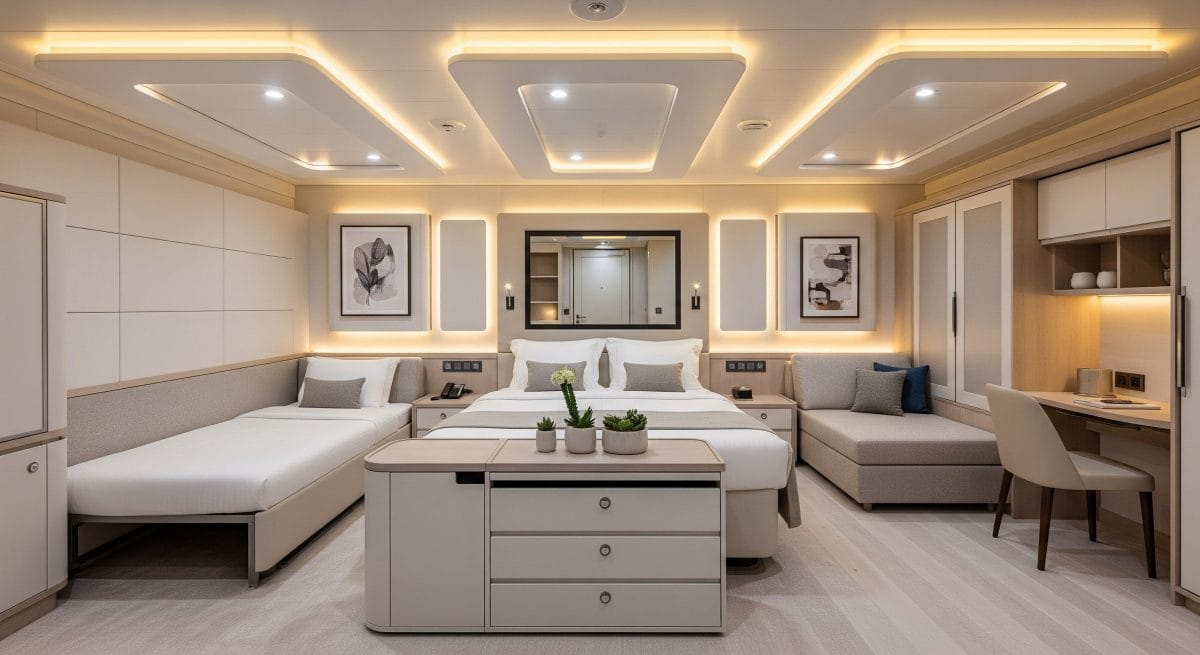
Inside cabins are usually located in the ship’s core or below the waterline, which means they have no windows. This can make the space feel enclosed or gloomy. To counter this, designers use strategic lighting layouts spreading light sources throughout the space, embedding fixtures into walls, furniture, and ceilings to create layered light pools.
Properly distributed lighting enhances the perception of space and airiness.
The use of LED technology has become essential in modern ship interiors due to its low energy consumption, long lifespan, and minimal heat output.
Soft-toned and indirect lighting helps passengers feel relaxed while visually enlarging the cabin.
2. Visual Openness and Interior Perspectives
Not every cabin can offer a sea view but that doesn’t mean it must feel completely enclosed. Contemporary cruise ship design often incorporates interior-facing windows or digital panels that provide visual access to shared areas or simulated views. This approach introduces a sense of natural light and connection to the environment.
Additionally, color palettes and material selections play a critical role.
Light-toned walls, reflective surfaces, and subtle textural contrasts create an illusion of spaciousness and warmth, transforming even the smallest cabin into a cozy retreat.
3. Shaping and Transforming the Space
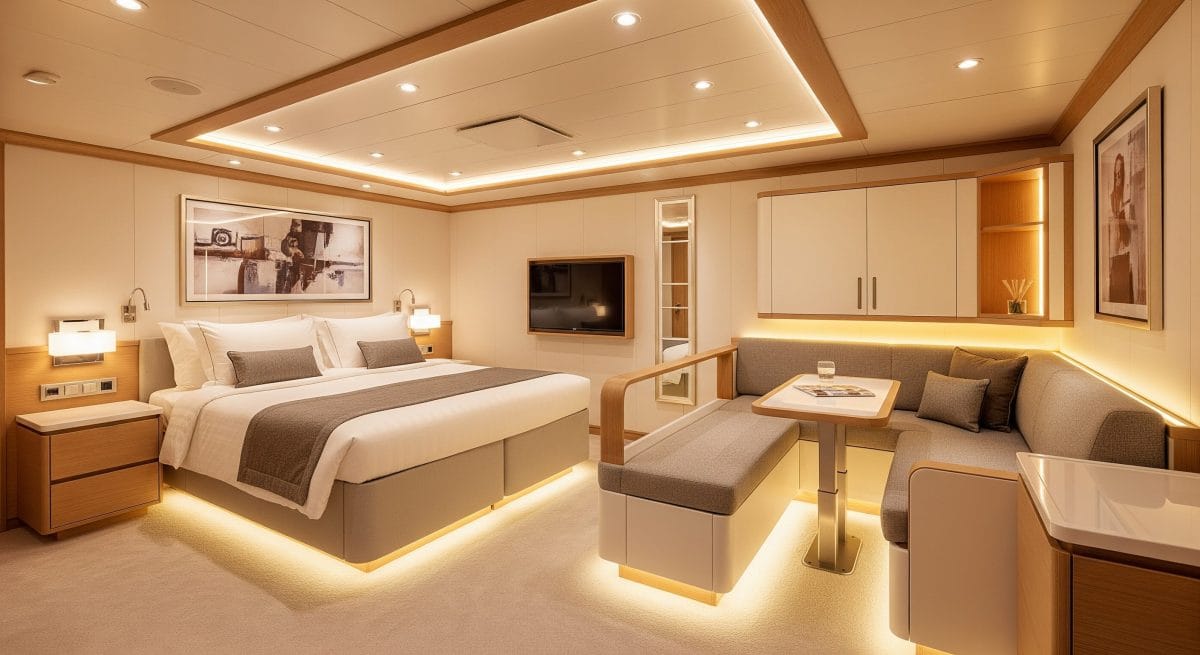
Inside cabins offer limited square footage, so multi-functional furniture solutions are essential.
Convertible beds, foldable desks, and modular seating allow the cabin to transition from a living area during the day to a comfortable bedroom at night.
Light curtains or decorative partitions can subtly divide the space without cluttering it.
These elements add flexibility and comfort, allowing passengers to personalize their cabins while maximizing every centimeter of space.
4. The Role of Technology

Technology has always been a strong ally of cruise interior design. In modern cabins, digital systems allow passengers to control lighting, temperature, and sound levels from a single panel.
Some inside cabins feature virtual windows or balcony screens, displaying real-time or simulated ocean views. This innovative approach brings the calming sensation of the sea into otherwise windowless rooms.
Energy-efficient lighting, smart climate control, and advanced ventilation systems also enhance sustainability while maintaining passenger comfort aligning with modern environmental standards in maritime design.
5. Location and Experience Design
The appeal of an inside cabin can also be influenced by its location within the ship. Many cruise lines now place inside cabins near spa or wellness zones, integrating them into health-focused areas.
These rooms may include aromatherapy features, spa-inspired amenities, and exclusive access to relaxation facilities.
By aligning the cabin’s location with the overall experience, designers can increase both its desirability and value.
Passengers are often willing to pay more for such added benefits, turning design strategy into a revenue opportunity for cruise operators.
6. Designing for the Target Audience
Different travelers have different needs. For some, inside cabins are ideal because they offer a dark and quiet environment for uninterrupted rest — perfect for light-sensitive sleepers. Others value the privacy and peacefulness these cabins provide.
To enhance comfort, designers often use sound-absorbing materials and acoustic panels to minimize ambient noise. Modern flooring systems, wall treatments, and ceilings with acoustic insulation contribute to a more serene and restful atmosphere, ensuring guests enjoy a deep, comfortable sleep
Small Space, Big Experience
With thoughtful design, inside cabins can evolve from limited spaces into creative, multifunctional living areas.
Through strategic lighting, smart material selection, space optimization, and technological integration, designers can transform these cabins into bright, functional, and aesthetically pleasing environments.
Modern cruise ship interior design focuses not only on comfort but also on psychological well-being and sensory experience proving once again that great design can turn even the smallest spaces into memorable destinations at sea.